Case study · 06 of 06

Loop

A student engagement platform shaped by real student feedback.

Role
Product designer, Paradigm Innovation
Client
PurposeWorks, with Ian Andolsek
Pilot
Haverford College
Platforms
Web and mobile
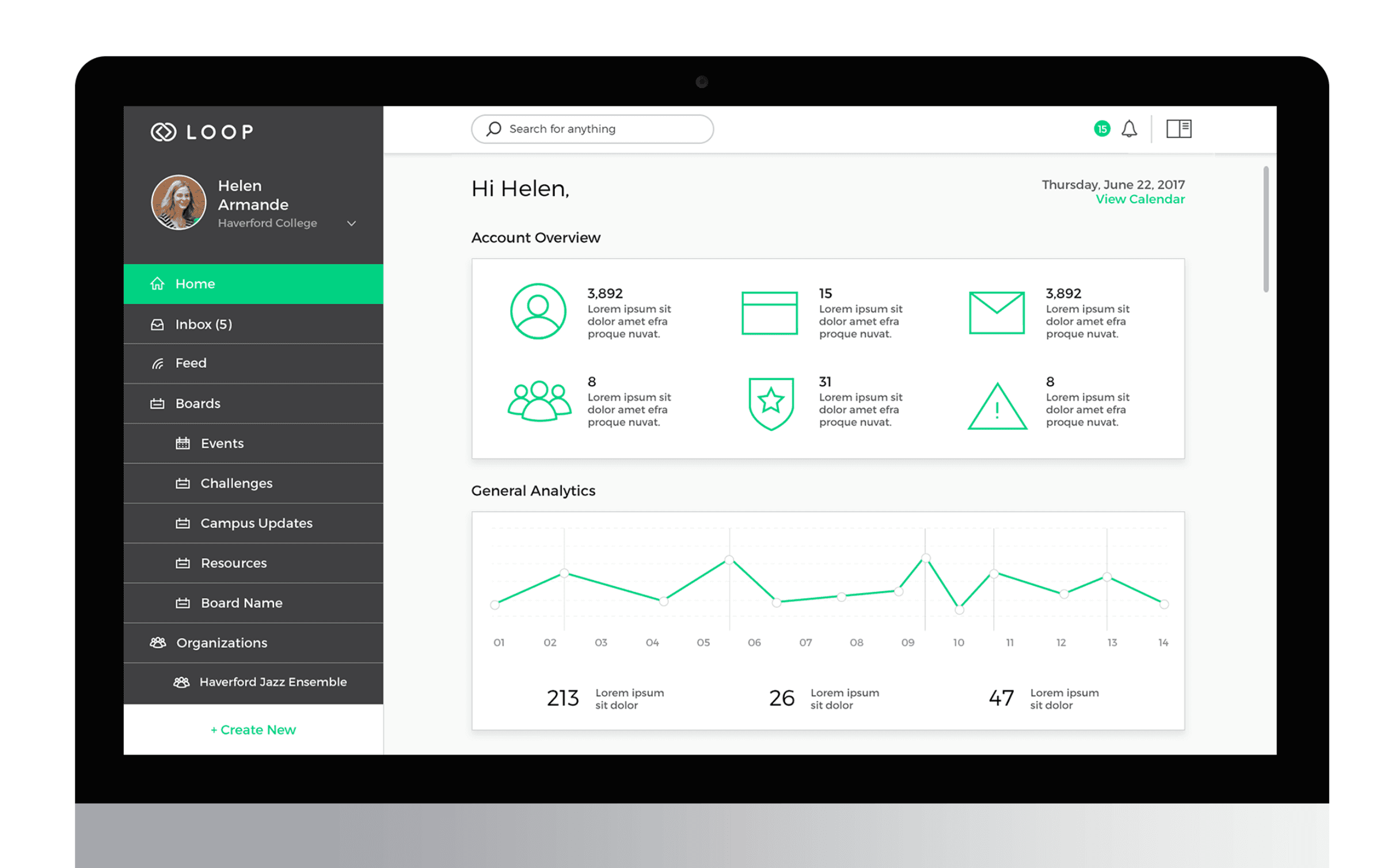
A laptop screen showing the Loop platform dashboard

The setting

Loop set out to connect university students around personal and professional interests, across web and mobile, with room for clubs, groups, faculty and staff. Our client was PurposeWorks, a company specializing in simplified team workspaces for businesses, whose lead contact, Ian Andolsek, was a student working to pilot the platform at Haverford College.

It is the project on this site where the most important deliverable was a finding, not a feature.

How it unfolded

Mapping what students need

We started by mapping everything students might want to connect about: what they would share, how personal and professional interests overlap, and where those needs cluster. Grouping them into themes gave us the experiences to design for.

Why it matteredDesigning from needs rather than from features is what later made it possible to recognize that the feed was the wrong product, and to see what the right one was.
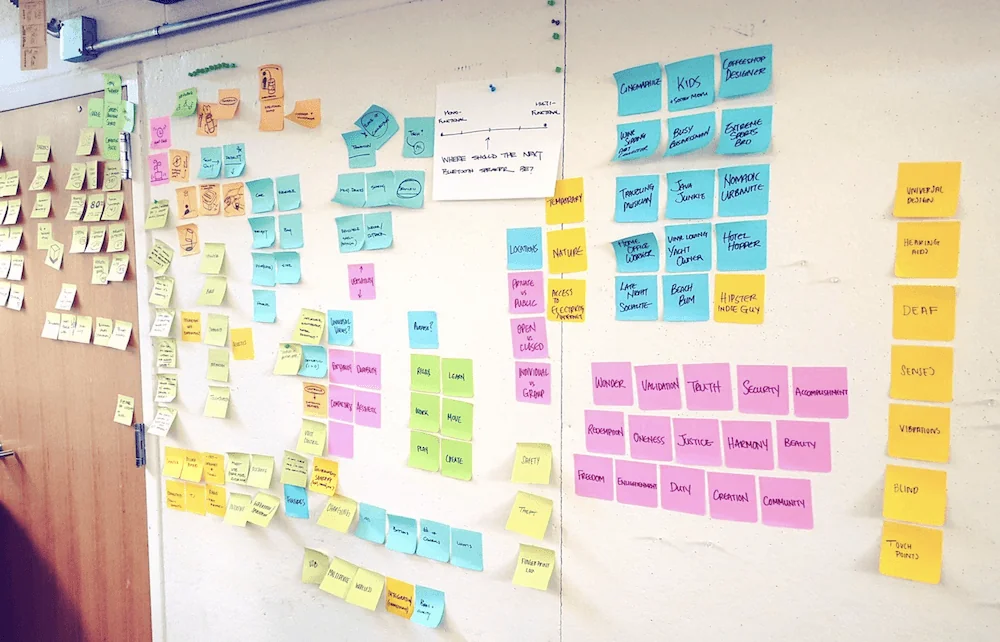
A whiteboard of sticky notes grouped by theme

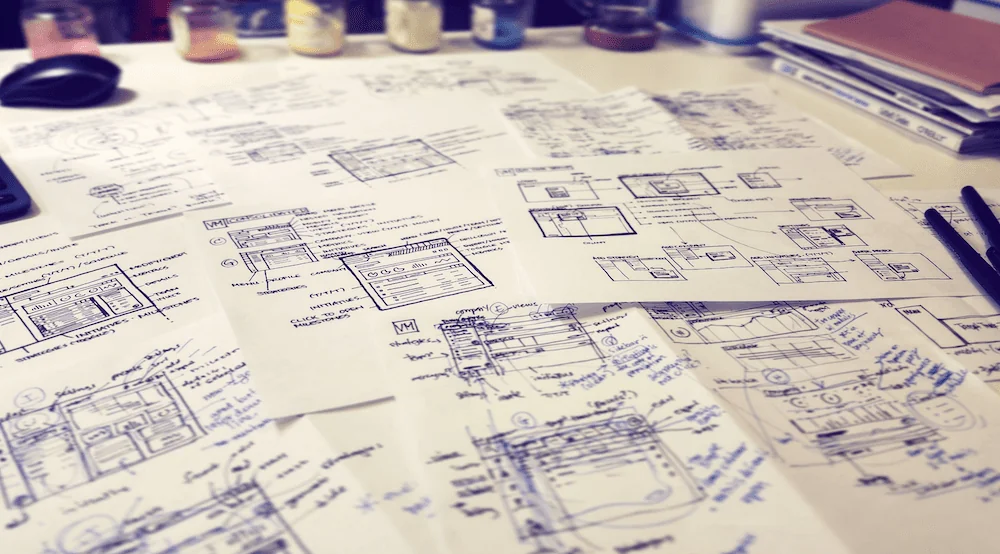
Journeys, wireframes, prototypes

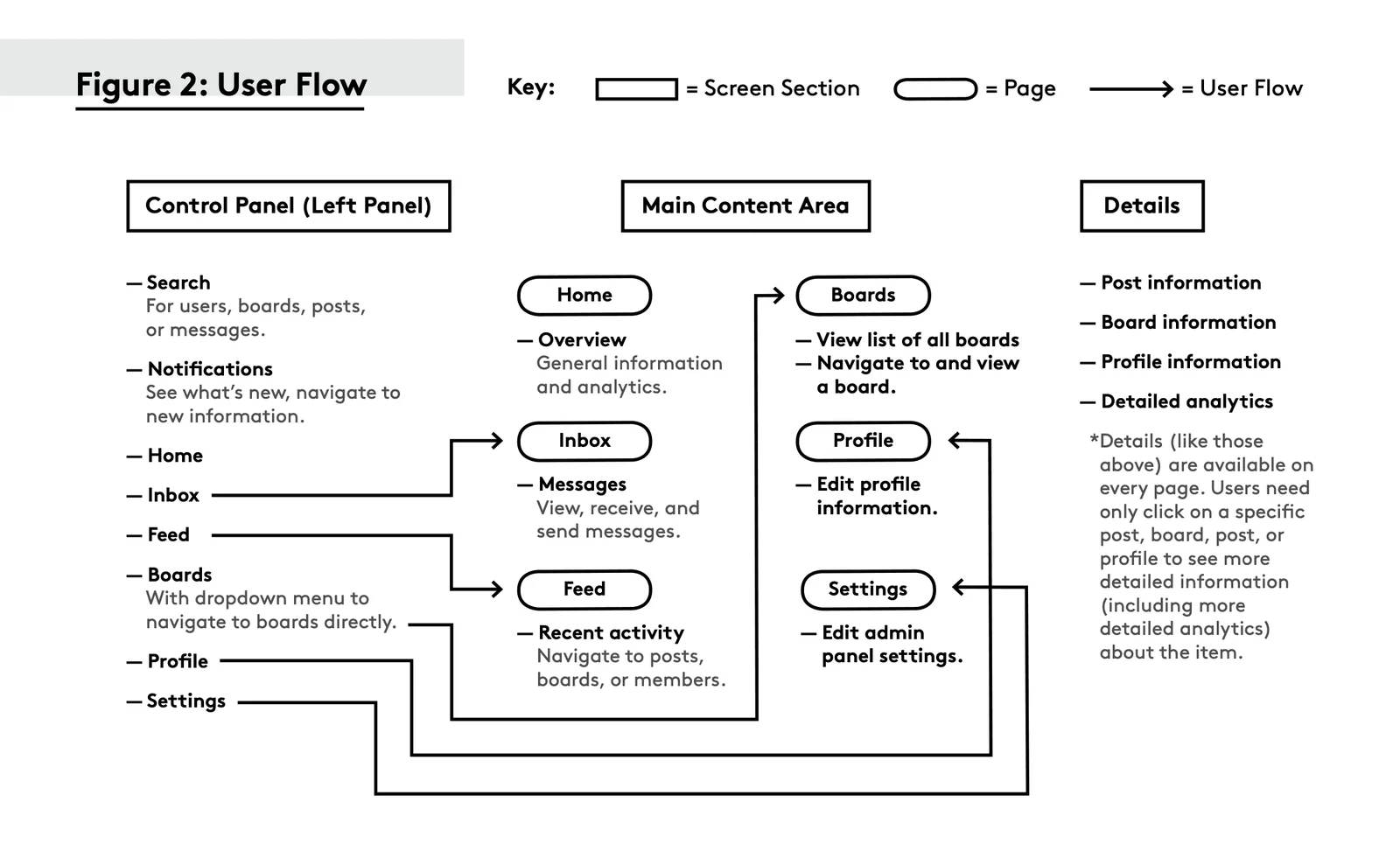
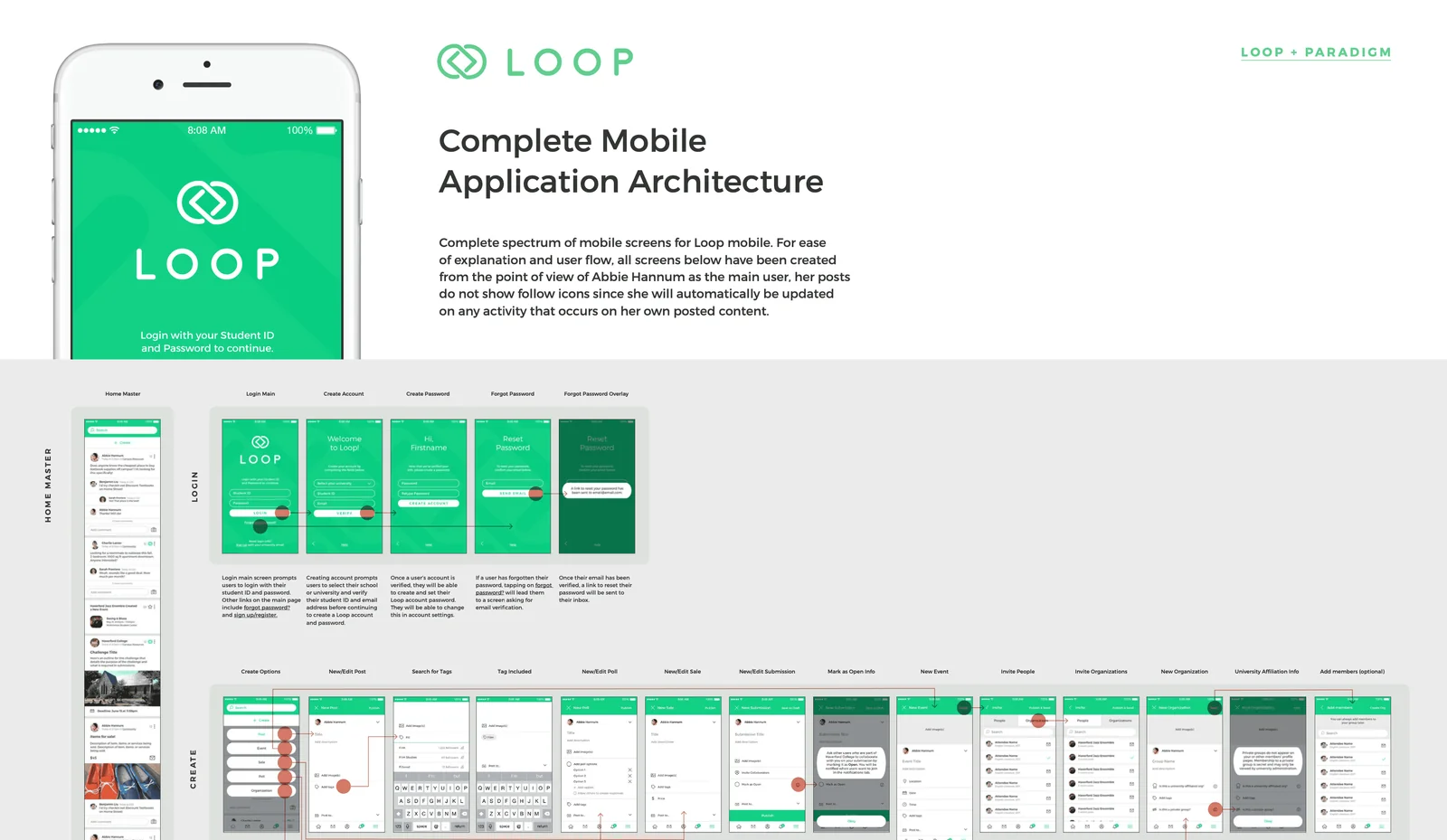
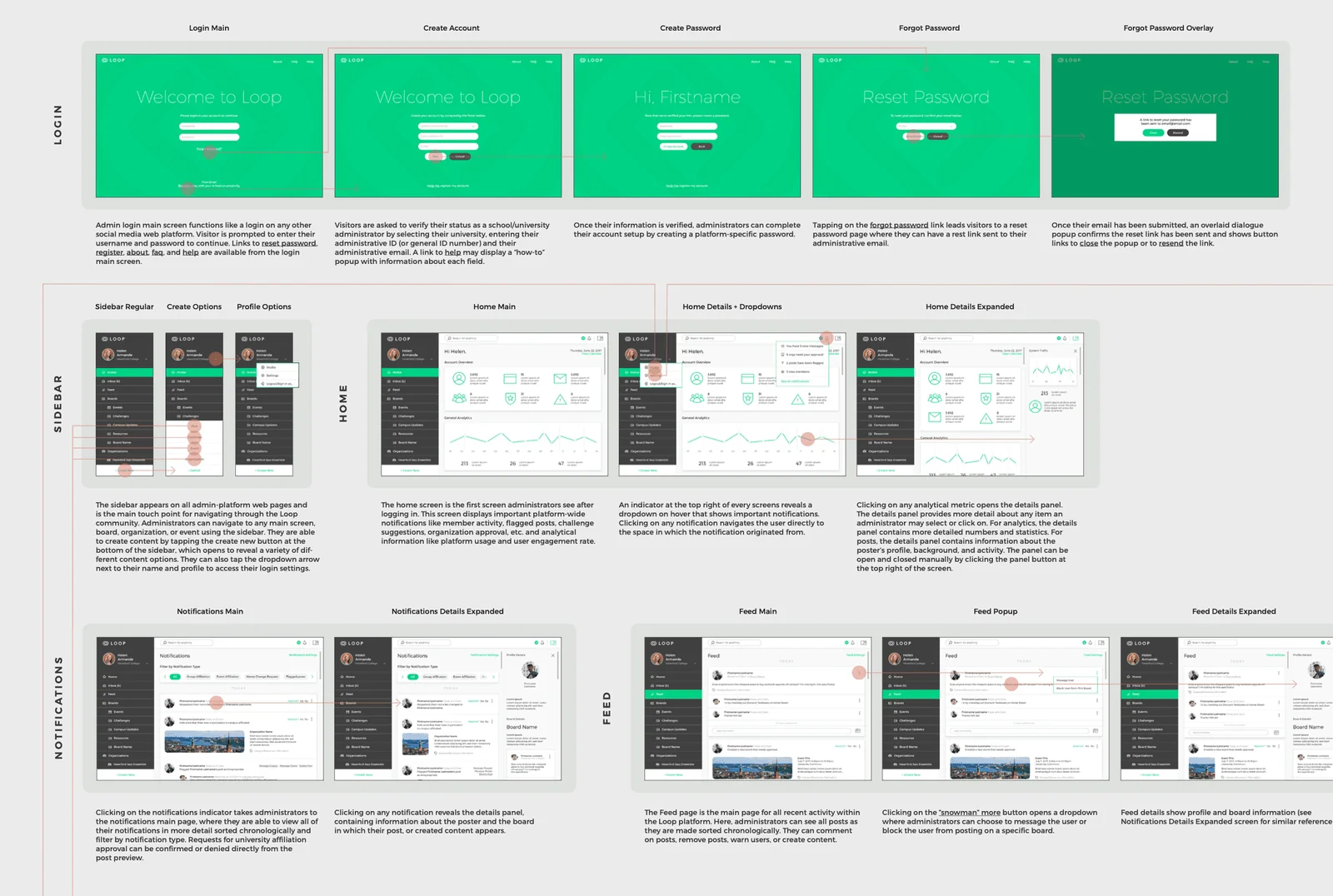
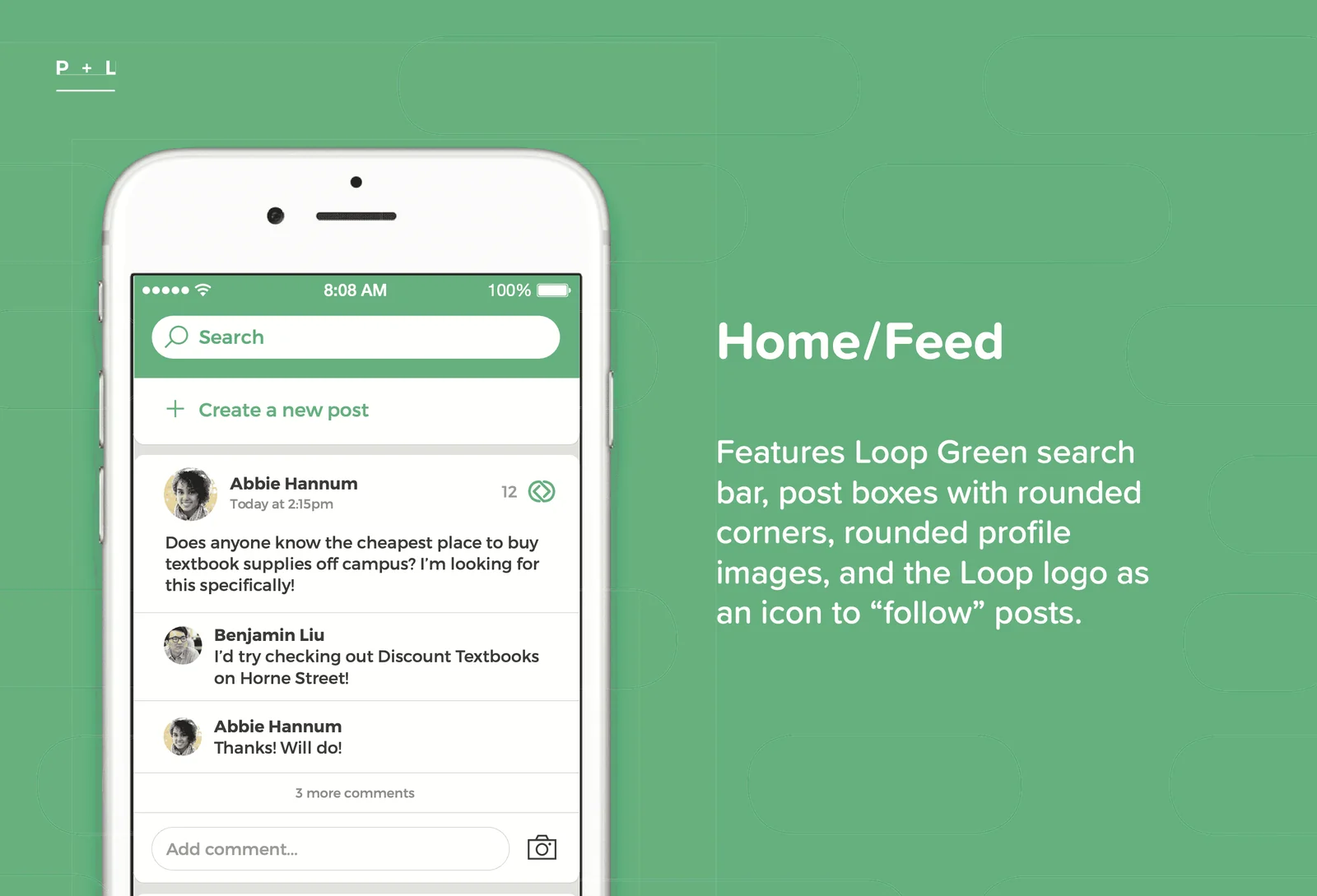
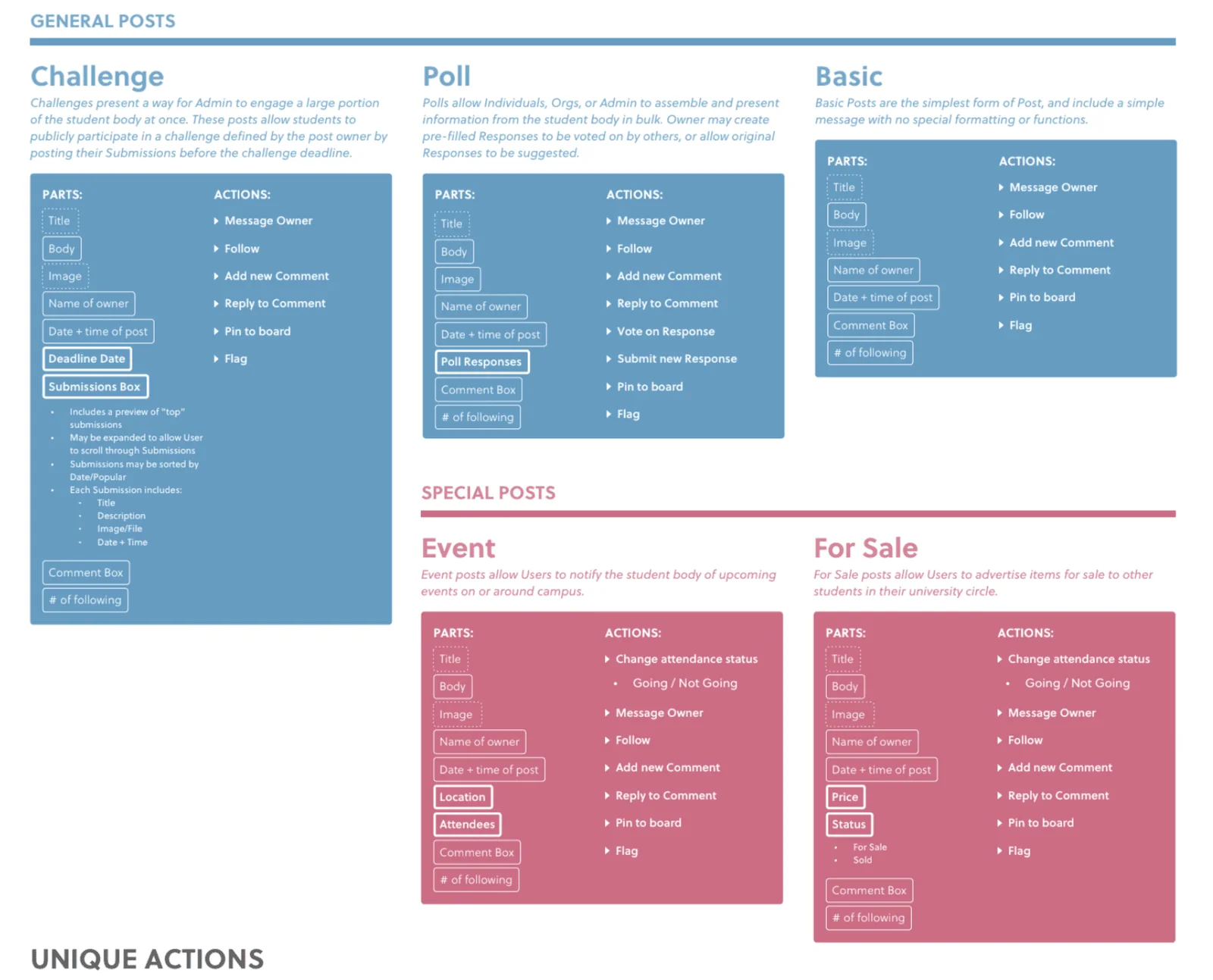
Each experience began as a set of user journeys, refined into wireframes and then high-fidelity prototypes for both the mobile app and the desktop platform, with a full architecture for each.

Why it matteredA complete architecture meant the team could test a whole product with students, not a screen or two, and trust what the results said about the concept.

A rough user-flow diagram

Testing with students, and the pivot

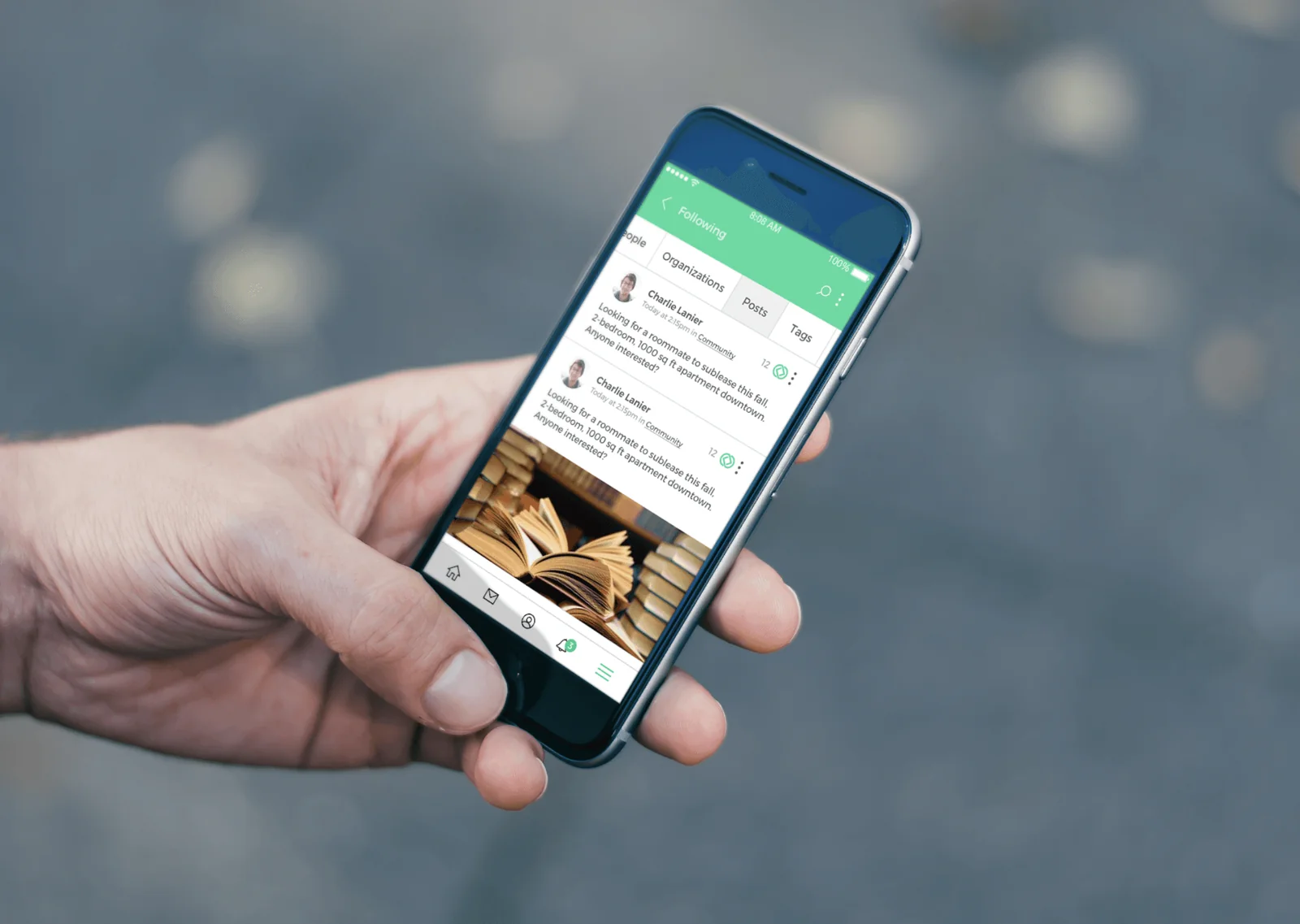
With PurposeWorks we tested the proposed solutions with real students at Haverford before anything was built. The finding was clear: the social-media structure the platform rested on did not drive engagement, because students' interactions were already happening on Facebook, WhatsApp and GroupMe. The product became a quick-matching tool for finding other students with the same interests on campus, with the group experience following once there was real demand for it.

Why it matteredTesting before development turned an expensive rebuild into a redirection. The client got a product students said they wanted, rather than one they had already replaced.

A hand holding a phone with the Loop app on screen

What it added up to

Loop emerged as a platform where students, faculty and staff could come together around their interests, and it looked very different from our first ideas. That difference is the point: the final product addressed the needs our early architecture had identified, in the form students would actually use.

Customer Experience Design · Information Architecture · UX/UI Design